
Busan
Transportation: taxis?
Hotel: Still a mystery
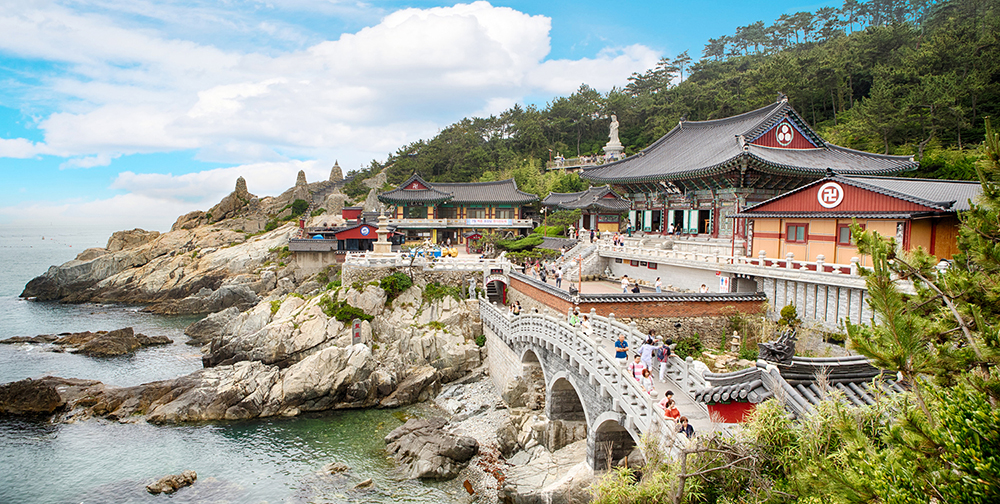
Plans: Our biggest priority in Busan is the Yonggungsa Temple, built on a cliff overlooking the East Sea and accessible only by wooden bridges across the rocky outcroppings. The temple was originally built in the 1300s but has been destroyed and rebuilt a couple of times, most recently in the 1970s.
Fun Fact – Most of the temples we will visit in Japan are associated with the Shinto religion. The temples in South Korea are Buddhist.
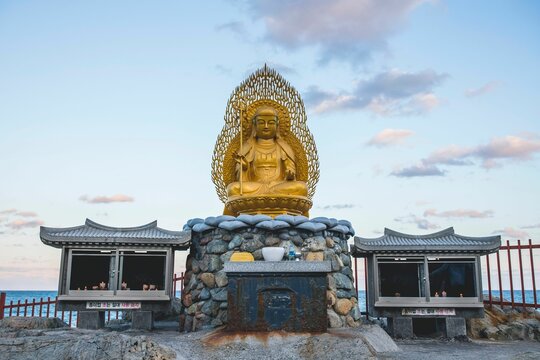
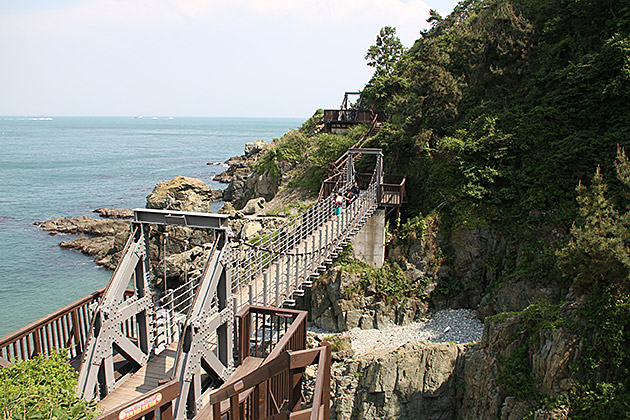
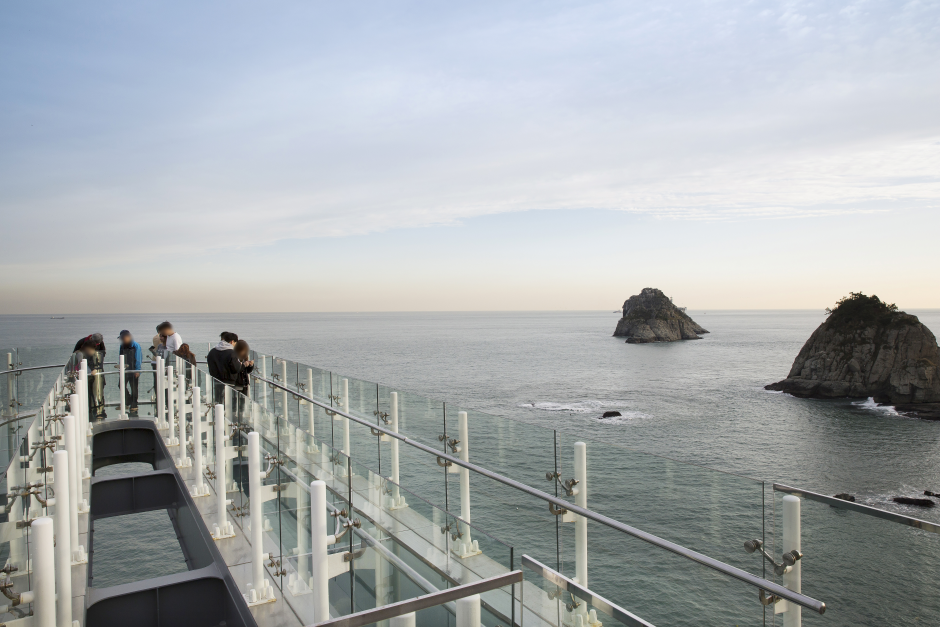
From the temple, there are several paths running along the cliffs by the ocean like the Igidae Coastal Walk as well as a glass skywalk. There are parks and paths all over Busan. If you like to walk, this would be a wonderful place for you. Maybe not so much for me. Actually the scenery looks so beautiful even I am looking forward to walking around in the thing they call “outside”.

Later I’d like to visit the United Nations War Memorial where international soldiers killed in the Korean War are buried. Although soldiers had been buried there during the war, it was an unofficial site until it was formally established in 1959. It remains the only UN cemetery in the world, with the graves of over 2300 soldiers from 22 countries .
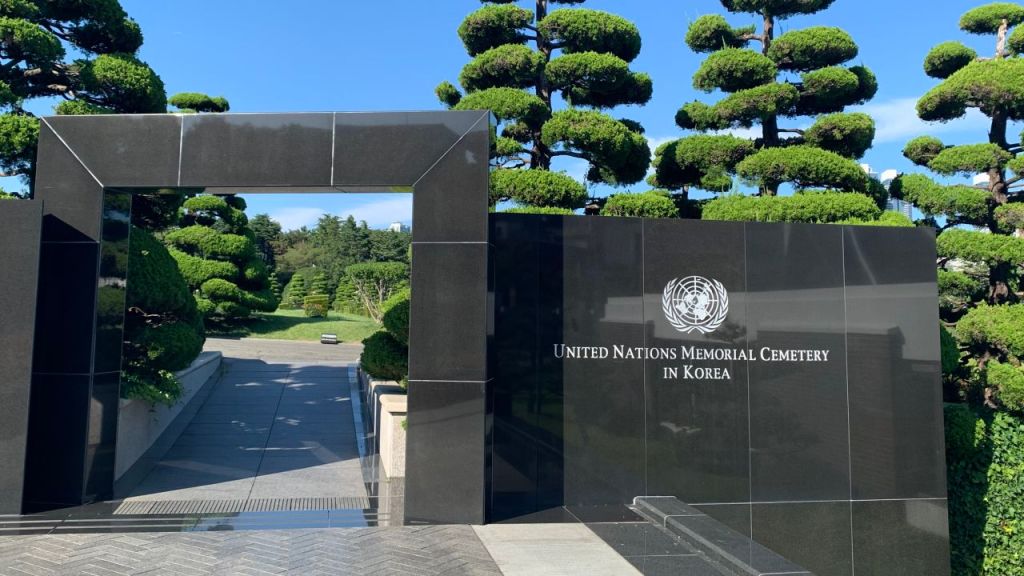
When North Korea invaded in 1950, my grandparents, mother and uncle were living in Osaka, Japan. As one of the only US army personnel stationed in East Asia with battle experience, my grandfather was sent to South Korea within the first week, while the US troops were understaffed, underinformed and underequipped. Most of the men in the battalion under his command were killed. We don’t have time this trip to visit any of the battle sites, but the least we can do is honor the graves of some of his comrades while we’re in the area.
While researching for this trip, I have learned a lot about my grandfather’s involvement in the controversial first days of the war. There are several articles and books that have excerpts available for free online if you want to know more too. My grandfather was Colonel Harold Ayres but everyone called him Colonel Red because of his hair. Google his name and “Korean War” to find more information.
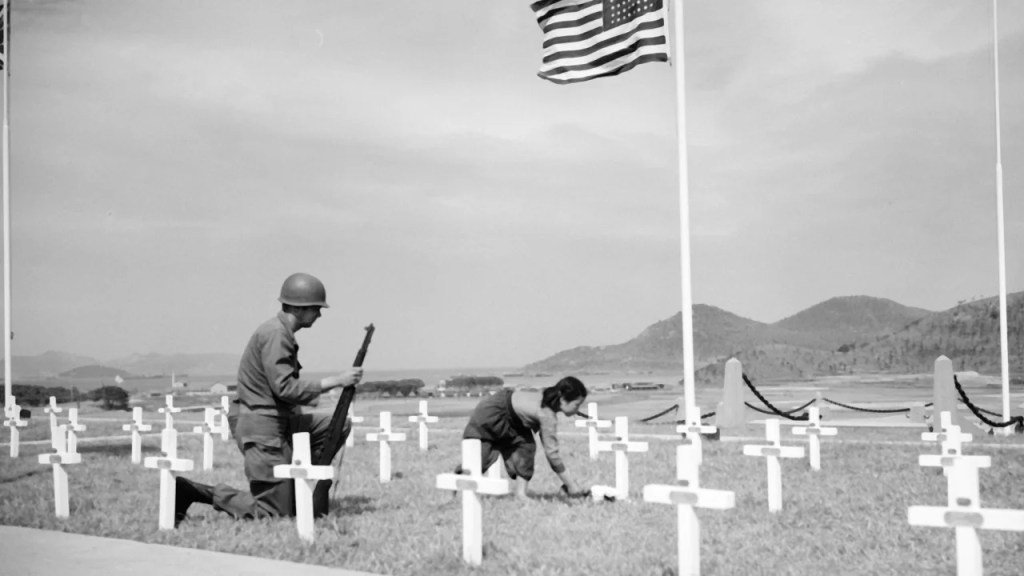
The cemetery in 1951
Fun Fact – the Korean War never ended. North and South Korea signed an armistice in 1953 pausing the hostilities but never signed a peace treaty.
In the evening we don’t have plans. We might wander over to Gwangalli Beach with its stunning views of the illuminated Gwangan Bridge. At certain times of the year, there are fireworks and drone shows from this beach. But if I’ve been practical and we’re at the Fairfield Inn, we may walk the quieter Songdo Beach with its “Cloud Trails”, elevated walkways snaking through the bay.

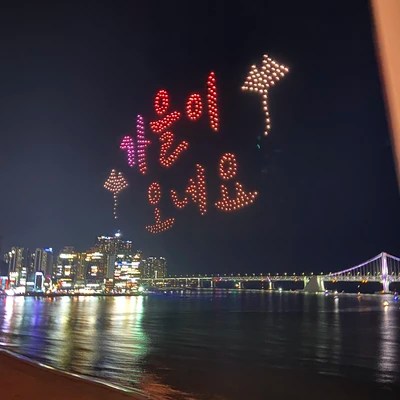
Drone show at Gwangalli Beach. Translation is “Fall is here!”.
Scaredy Cat rating: One paw. Nothing especially scary here unless you count the anxiety of wanting to test out my limited Korean and fearing the reaction of the locals. Oh, the overwhelming fear of looking stupid.
Fun Fact – Even though South Korea is roughly the size of Indiana, its regions are known for distinct dialects called “satoori”. These dialects were able to develop in spite of the country’s small size because areas were isolated from each other due to the mountainous terrain. Busan’s dialect is strong, meaning there’s even less of a chance that I’ll understand anything they’re saying.


 Scaredy Cat Travels
Leave a comment